

Choosing between gas vs electric ranges often comes down to cooking style, budget, and kitchen setup. Both options handle everyday cooking well, but they perform quite differently in terms of heat control and efficiency. This guide breaks down the key differences to help make the right choice easier.
At Appliances 4 Less Omaha, we offer quality scratch and dent appliances at prices that make sense for real households. We carry ranges, refrigerators, washers, dryers, and more, all inspected and ready for a new home.
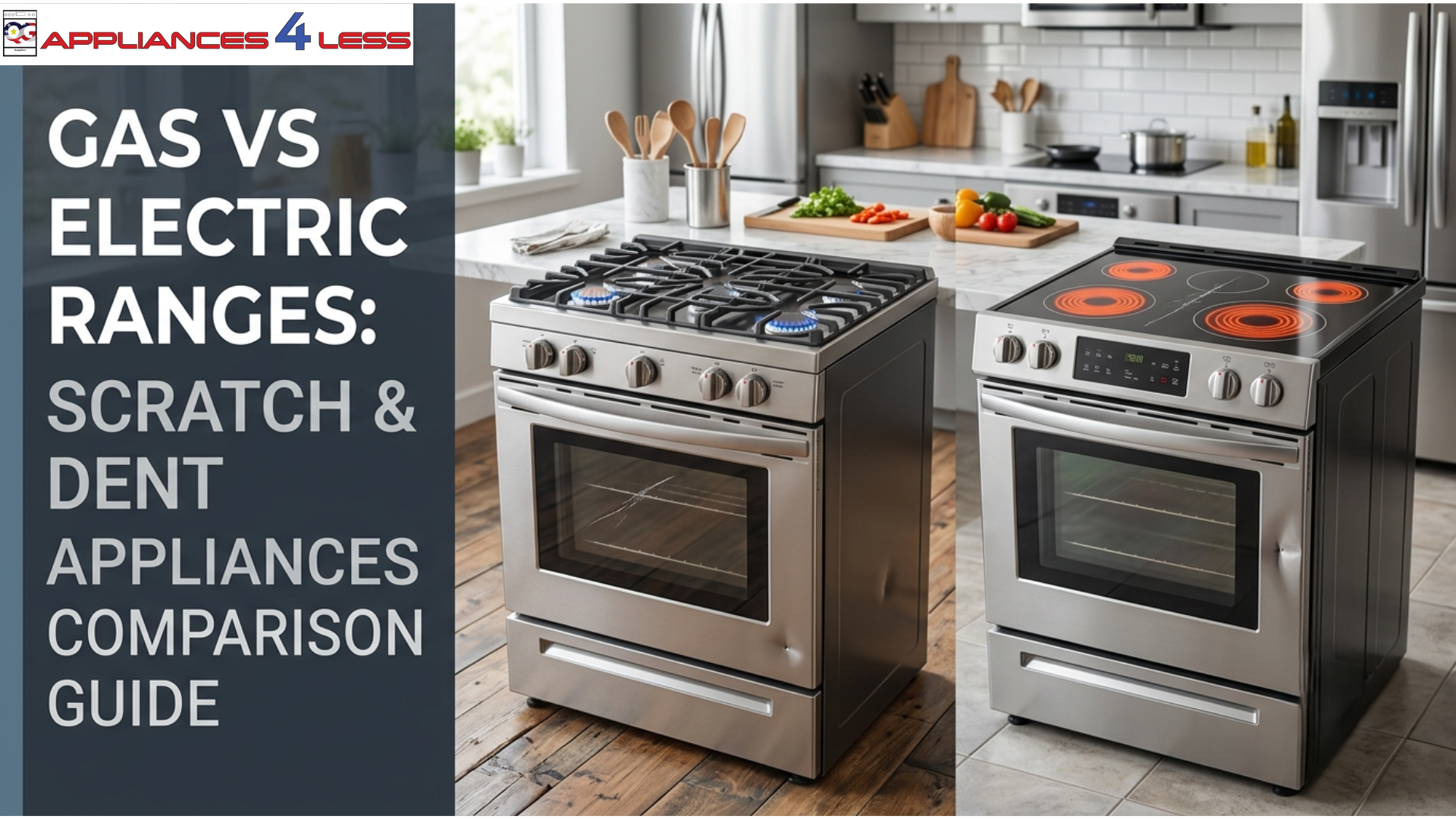
What Sets a Gas Range apart from an Electric Range
A gas range uses an open flame for cooking, offering quick temperature adjustments and instant heat control. An electric range uses heated coils or a smooth glass top, providing steady, even heat over time. Both styles cook food well, but their heating methods differ quite a bit.
Which Range Type Works Better for Different Cooking Styles
Cooks who prefer quick temperature changes and precise flame control often lean toward gas ranges for everyday meals. Those who value steady, even heating for baking or simmering may find electric ranges better suited to their cooking habits and kitchen routine.
Advantages of a Gas Range
- Offers instant heat control for quick adjustments.
- Provides precise flame visibility while cooking meals.
- Works well during power outages in many homes.
Disadvantages of a Gas Range
- Requires a gas line connection for installation.
- Open flame needs extra care around children.
Advantages of an Electric Range
- Delivers steady, even heat for consistent cooking.
- Smooth glass tops are easier to clean quickly.
Disadvantages of an Electric Range
- Takes longer to heat up and cool down.
- Stops working entirely during power outages at home.
We keep a steady inventory of both gas and electric ranges at scratch and dent pricing throughout the store. Visiting in person allows buyers to compare styles and features before making a final decision on their next kitchen appliance.
How to Decide between These Two Range Types
Shoppers deciding between range types should also think about other kitchen appliances, like comparing Over-the-Range vs Countertop Microwaves, since layout and space often influence multiple decisions at once. Matching appliances to kitchen space and cooking habits leads to a smoother overall setup.
Shoppers browsing Appliances 4 Less Omaha often find that comparing both range types side by side helps clarify which option truly fits their household. Cooking habits, budget, and kitchen setup all play a role in making the right choice.
Conclusion
Deciding on gas vs electric ranges comes down to cooking style and kitchen setup. Appliances 4 Less Omaha makes it easy to compare both options and find a reliable range for any budget.
FAQ’s
1. What is the difference between gas and electric ranges?
Gas ranges use an open flame for instant heat, while electric ranges provide steady, even heating.
2. Which range type works better during a power outage?
Gas ranges typically still function during power outages, while electric ranges require electricity to operate.